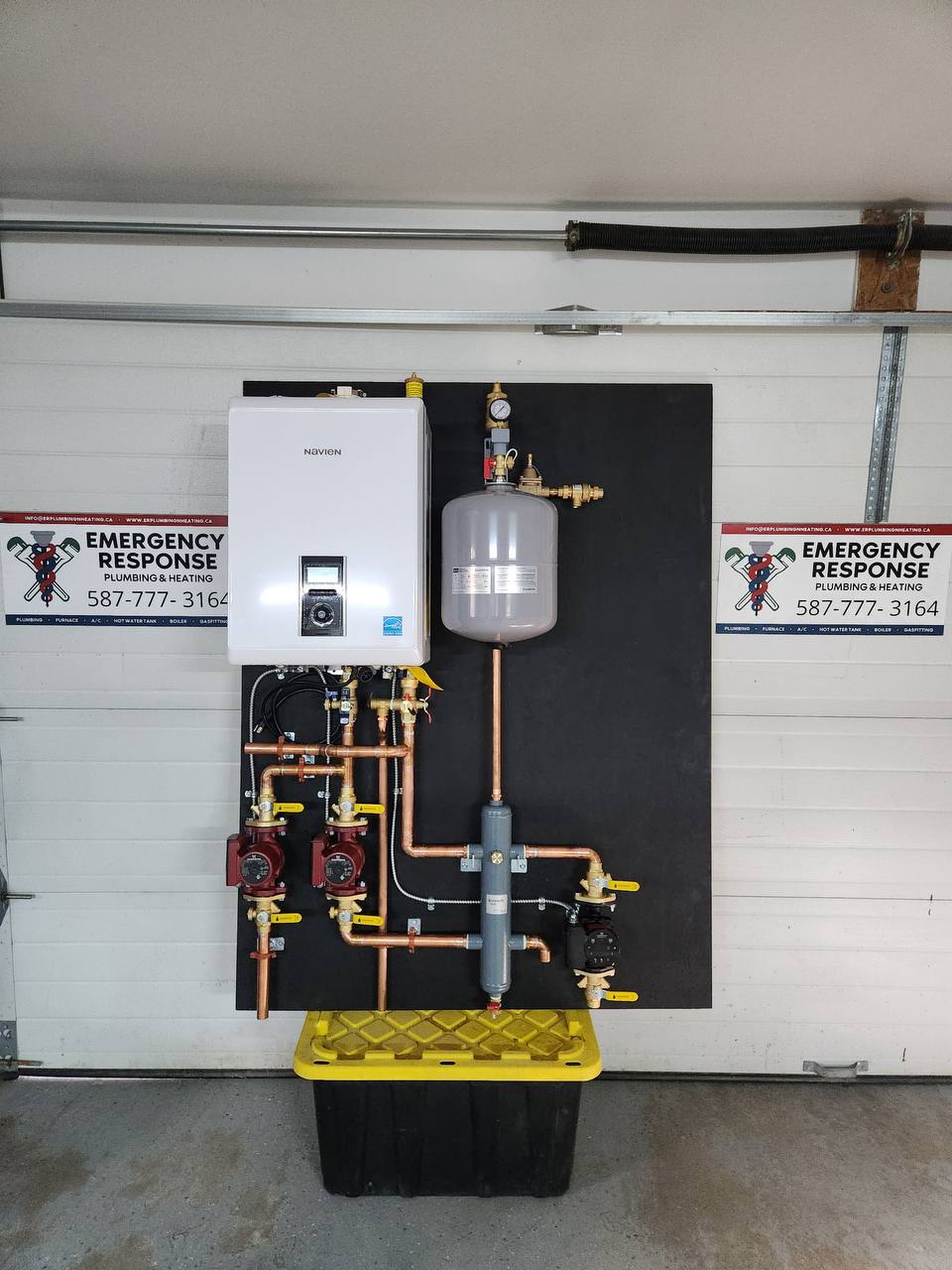
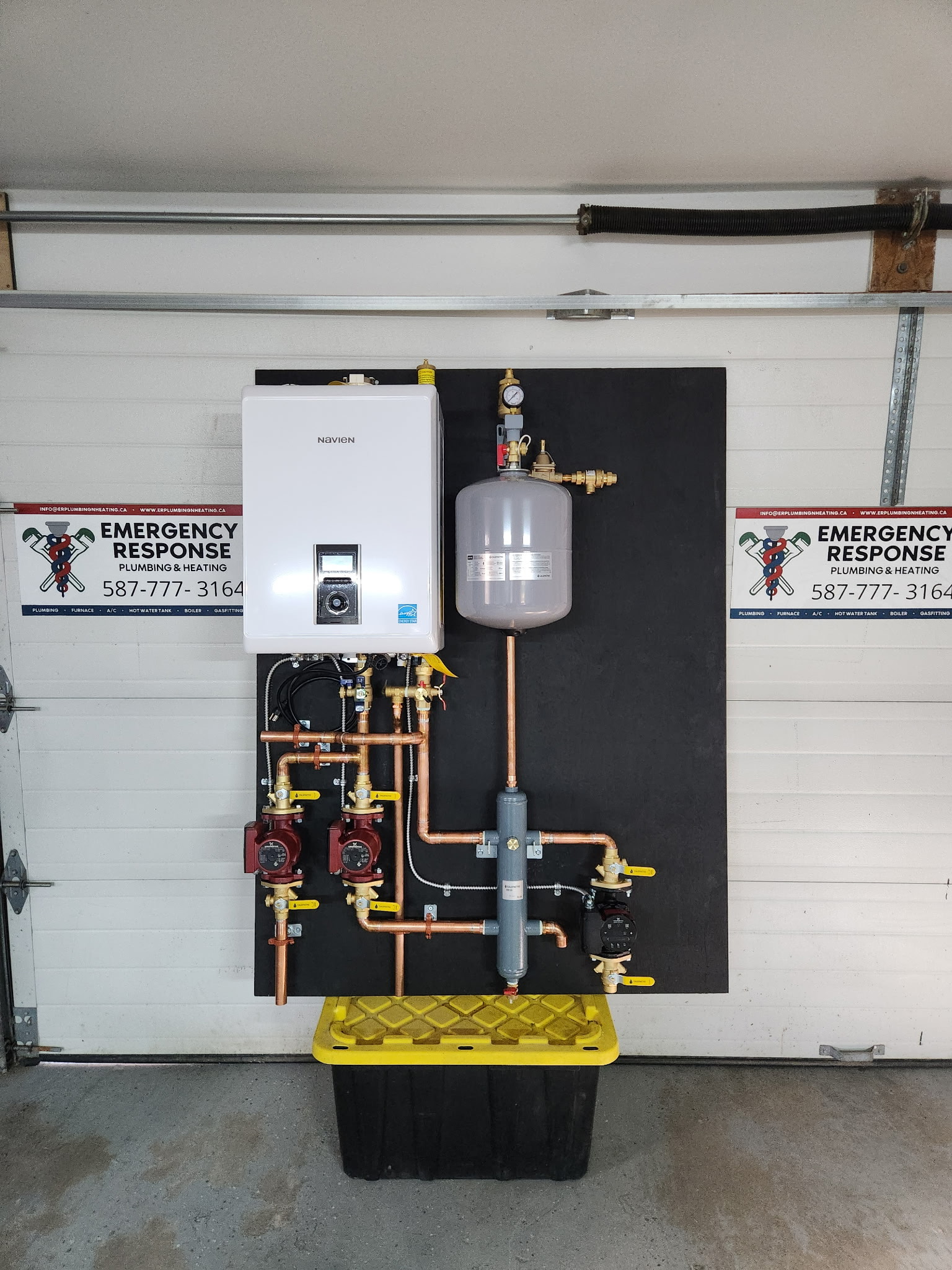
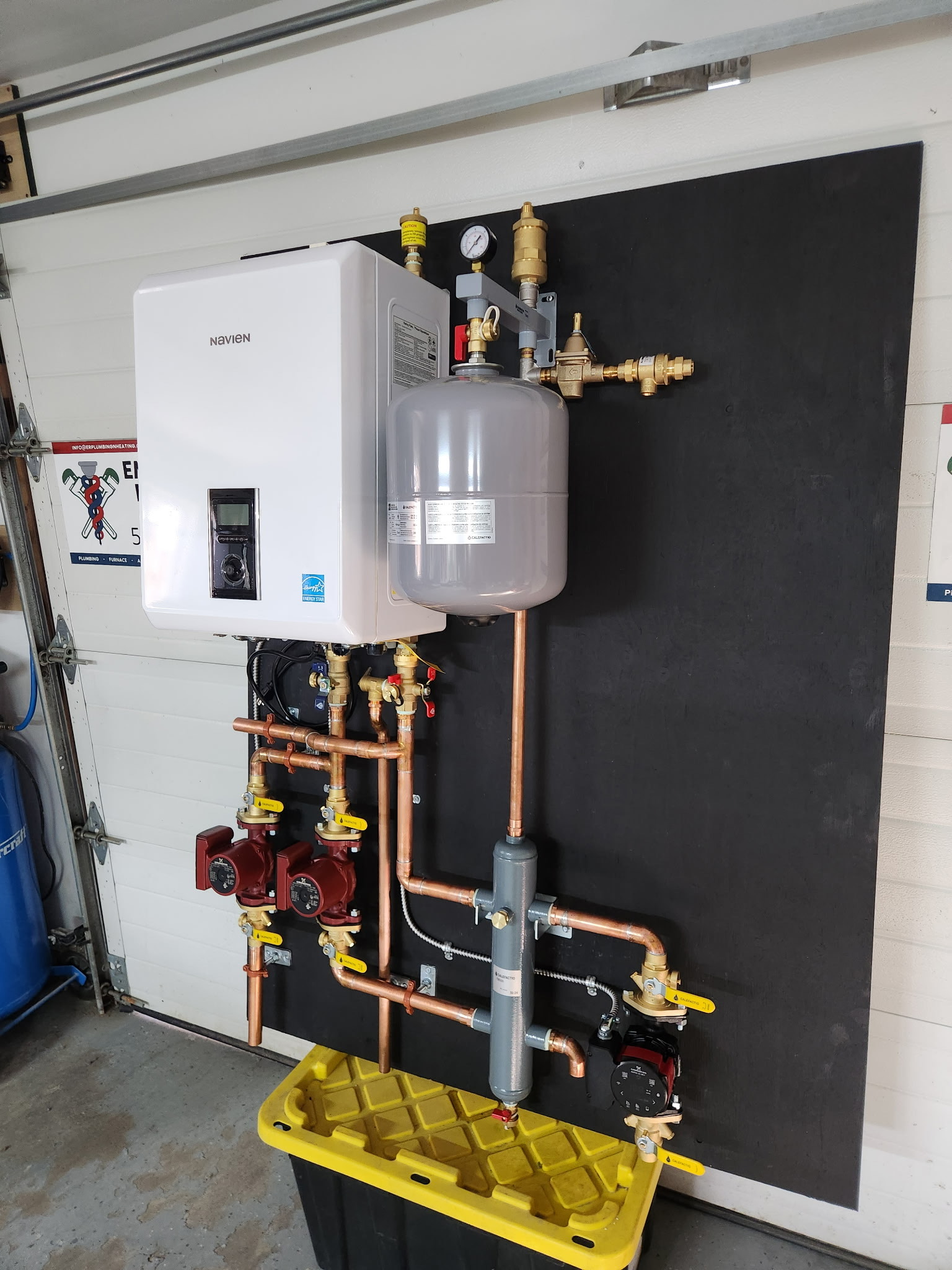
(What you’re actually looking at in this photo)
When most people think “heating system,” they picture a big metal furnace in the corner and some dusty ductwork. What you’re seeing in these photos is something very different: a high-efficiency hydronic heating system that delivers quiet, even heat using hot water instead of hot air.
This wall-mounted panel is the heart of a modern radiant or boiler system – the kind of setup we install all the time for Calgary homes and garages that want comfort and efficiency.
What Is a Hydronic Heating System?
“Hydronic” simply means water-based heating. Instead of blowing hot air through ducts, a boiler heats water and circulates it through:
In-floor radiant loops
Radiators or baseboards
Fan coils, unit heaters, or garage heaters
The result is:
No cold drafts
Less dust and allergens blowing around
Very stable, comfortable room temperatures
Great efficiency when paired with a condensing boiler like the one shown here
A Closer Look at the Components
Let’s break down what you’re seeing on this panel and what each part actually does.
1. Navien Wall-Hung Unit
The large white box on the left is a Navien high-efficiency tankless unit (often used as a boiler or combi-boiler).
What it does:
Heats water on demand instead of storing it in a big tank
Uses condensing technology to squeeze more heat out of the fuel
Can be configured for space heating only or space heating + domestic hot water
For homeowners, that means:
High efficiency (lower gas bills)
Compact wall-mounted design that frees up floor space
Consistent hot water and comfortable heat
2. Expansion Tank
To the right of the Navien is the round grey expansion tank.
When water heats up, it expands. In a closed hydronic system, that extra volume has to go somewhere. The expansion tank absorbs it, keeping system pressure stable and:
Protecting pipes, fittings, and the boiler from over-pressure
Reducing stress on components, which extends system life
It’s a small part that does a big job in keeping everything safe and reliable.
3. Circulator Pumps (Zone Pumps)
Down on the left side of the panel, you can see two red circulator pumps, plus a smaller black/red pump to the right.
These are the muscles of the system.
Their job is to:
Push hot water from the boiler out into different heating zones
Bring cooler water back to be reheated
Multiple circulators usually mean multiple zones – for example:
Main floor radiant
Basement radiant
Garage or shop heater
Indirect hot water tank, etc.
Zoning allows you to run different temperatures and schedules in different parts of the home, which means more comfort and better energy savings.
4. Hydronic Separator / Dirt & Air Separator
In the center of the piping is the grey vertical cylinder – this is a hydronic separator (often combining air and dirt separation).
Why it matters:
Removes tiny air bubbles that can cause noise, corrosion, and poor circulation
Captures dirt and sludge that would otherwise wear out pumps and plug small passages
Protects the boiler and helps the whole system run smoother and more efficiently
Think of it as a filter and traffic director for the water in the system.
5. Copper Piping, Valves & Fittings
You’ll notice a lot of neat copper piping with yellow-handled ball valves and precision-placed fittings.
This isn’t just about making it look pretty (although a clean panel layout is a good sign you’re dealing with a pro).
Good piping and valve placement:
Makes the system easy to service and troubleshoot
Allows different parts to be isolated without shutting everything down
Ensures proper flow direction and balancing between zones
Those valves are what let us purge air, test pressures, service pumps, and make future changes without ripping everything apart.
6. Drip Pan / Containment Tote
Underneath the entire assembly is a large yellow containment tote.
This simple piece adds an extra layer of protection:
Catches any accidental leaks or drips
Helps keep garages and mechanical rooms clean and dry
Often required or recommended when equipment is located above finished areas or near valuables
Again – small detail, big peace of mind.
Why Homeowners Love Hydronic Systems Like This
A panel like the one in the photos is built for people who want comfort, control, and long-term reliability:
✅ Higher Efficiency – Condensing technology and proper design can significantly cut heating costs compared to older boilers or oversized forced-air furnaces.
✅ Superior Comfort – Radiant and hydronic systems eliminate the hot-cold cycling of traditional forced air. Rooms feel evenly warm instead of “blasting hot then chilly.”
✅ Quiet Operation – No fan noise. Just silent, consistent heat.
✅ Clean Air – No dusty ductwork pushing allergens around.
✅ Future-Friendly – A well-designed panel makes it easy to add another zone later (e.g., finishing a basement or adding a heated garage).
Why Professional Design & Installation Matter
You’ll notice everything in these photos is:
Laid out on a solid backboard
Supported and strapped properly
Labeled, valved, and accessible
That’s not just for show. Proper design and installation:
Protects your warranty
Prevents noisy, inefficient operation
Reduces the risk of leaks or premature failures
Makes annual maintenance much faster and cheaper
Anyone can hang a boiler on the wall. Designing a clean, serviceable hydronic panel that will run smoothly for years is where experience really shows.
Thinking About Upgrading Your Heating System?
Whether you’re:
Renovating an older home
Adding radiant heat to a basement or garage
Replacing an aging boiler or furnace
Building a new home and want high-efficiency comfort from day one
A hydronic system like this can be a fantastic option.
If you’d like to know whether a Navien-based hydronic setup makes sense for your home, we can:
Look at your existing system
Talk through your comfort issues and goals
Recommend a right-sized solution, not a one-size-fits-all box